
Wait… I Can Charge Stuff Just by Walking?
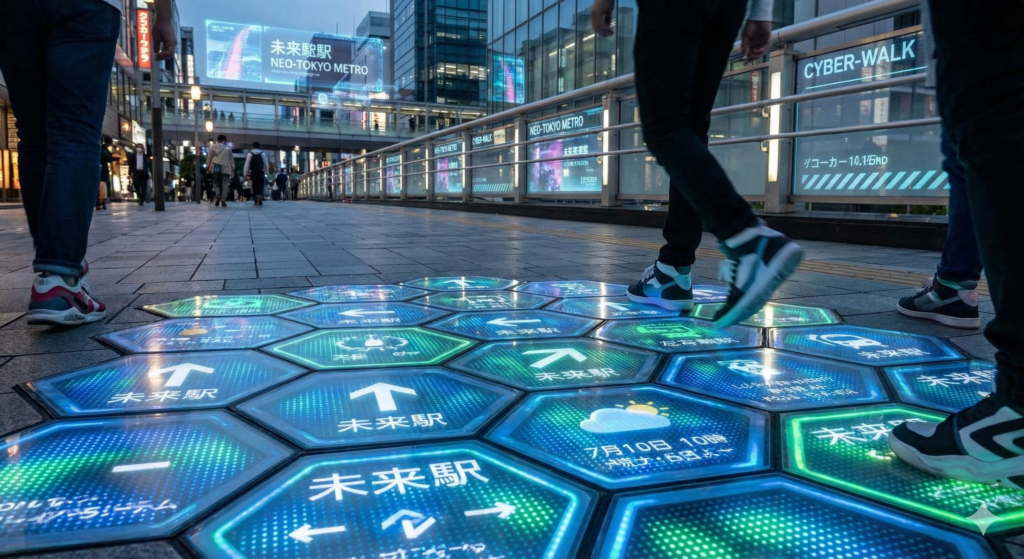
Imagine you’re walking through a train station in Tokyo, minding your own business, and every single step you take is quietly generating electricity. No cables, no plug points, no noisy generators just your footsteps turning into power.
That’s not sci‑fi anymore. In Japan, engineers have turned regular floors and sidewalks into tiny power plants using a clever technology called piezoelectric tiles. In simple terms: pressure in, electricity out.
So What Is This “Electricity From Walking” Thing?
apan has installed special floor tiles in busy public areas think train stations, sidewalks, shopping malls, and airports that generate electricity when people walk over them. The idea is simple: if millions of people are moving around every day anyway, why not convert that movement into energy?
These smart floors don’t power entire cities (yet), but they’re already being used to run things like LED displays, information boards, and small lighting systems in crowded places.
The Sci‑Fi Tech Behind It: Piezoelectricity (Explained Simply)
Let’s break down “piezoelectricity” without turning this into a physics lecture.
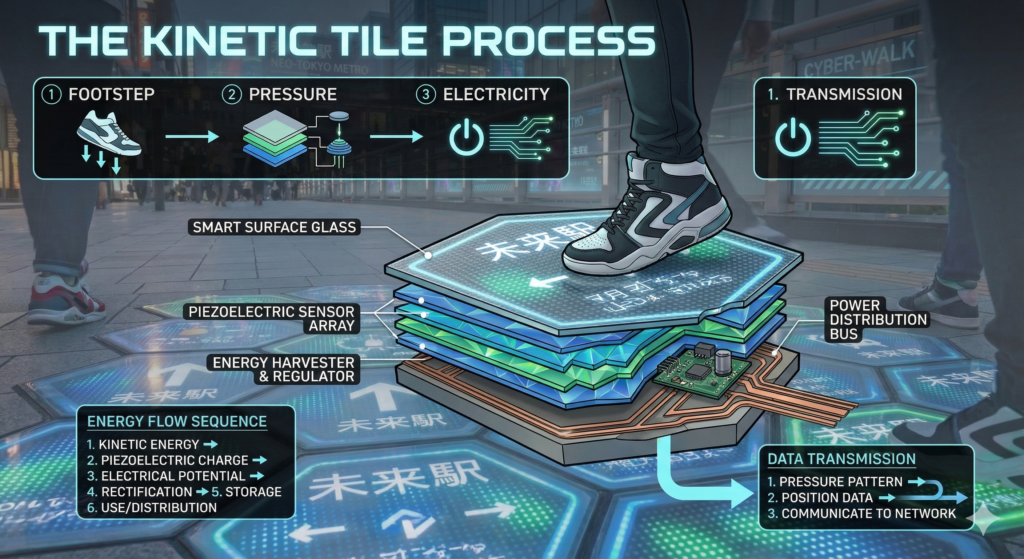
- Certain materials generate a small electric charge when they’re squeezed or pressed.
- Engineers put thin layers of these materials inside floor tiles.
- When you step on the tile, your weight creates pressure.
- That pressure gets converted into a tiny amount of electricity.
One step from one person doesn’t create much power. But put those tiles in a place like Tokyo’s Shibuya Station where thousands or even millions of footsteps pass every day and the energy adds up.
Real-Life Example: Shibuya Station and Beyond
This isn’t just a lab experiment. Japan has tested and used this tech in real-world locations for years.
- At Shibuya Station in Tokyo, piezoelectric flooring has been used in busy walkways to capture energy from commuters’ steps.
- The electricity generated powers LED displays and small digital signboards in the station.
- Similar tiles have been introduced in some shopping centers and airports in Japan, where there is constant foot traffic and a steady flow of “human energy” to harvest.
It’s like the building itself is saying: “You walk, I’ll take care of the lights.”
How Much Power Can a Footstep Really Generate?
Let’s manage expectations: your single step is not going to charge a Tesla.
- A single footstep generates a small burst of energy enough to power low-energy devices such as LEDs for a short time.
- Some demonstrations claim one step can light multiple bulbs for a few seconds, but the real magic happens when thousands of steps are combined.
So instead of thinking “I’ll power my whole house by walking,” think:
- Powering information screens in stations
- Running decorative lighting in a mall
- Supporting sensors or small displays in public spaces
It’s a great example of turning something we do every day into background clean energy.
Why This Tech Is a Big Deal (Even If It’s “Small” Power)
- It’s renewable and clean
The system uses human movement, so there’s no fuel, no smoke, no extra emissions just footsteps. - It turns cities into active energy systems
Instead of buildings only consuming energy, they start to produce a little bit of it back using the flow of people. - It raises awareness
Seeing a screen that says “Powered by your steps” makes people think about energy differently. It’s education plus innovation in one. - It’s perfect for high-traffic spaces
Places like stations, malls, stadiums, airports, and big events are ideal testbeds for this tech.
The Limitations (Because No Tech Is Perfect)
Of course, there are some challenges and drawbacks.
- Low energy per step
The power from each footstep is tiny. You need a lot of people walking over a lot of tiles to make it meaningful. - Installation cost
These tiles and the systems behind them are still relatively expensive, so they’re not everywhere yet. - Best used as a “bonus” source
Right now, this works best as supplementary power for specific devices, not a replacement for main power grids.
But even with these limitations, Japan is proving that micro-energy solutions can play a real role in future cities.
Where Could This Go in the Future?
Here’s where it gets exciting. If this technology keeps improving and becomes cheaper, we could see:
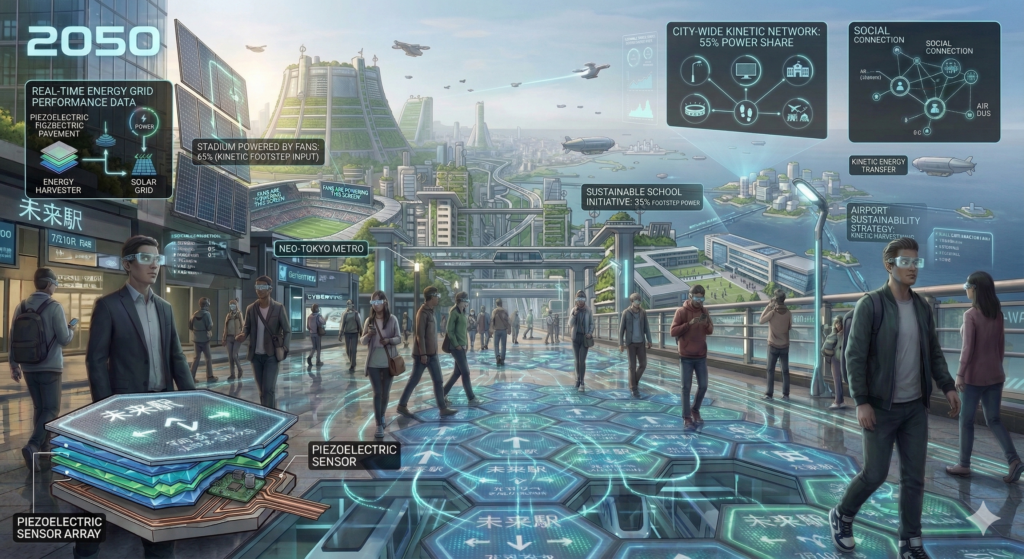
- Smart sidewalks that help power streetlights in busy areas.
- Stadiums where the crowd literally powers the stadium screens.
- Schools, airports, and malls that use footstep energy as part of their sustainability strategy.
Combine this with other tech like solar panels on roofs and kinetic energy from doors or elevators and suddenly buildings start looking a lot smarter about energy.
Why Japan Keeps Leading With Ideas Like This
Japan has a long history of blending technology with everyday life vending machines, high-speed trains, robotic assistants, and now walkable power floors.
Crowded cities like Tokyo make the perfect testing ground:
- High population density
- Constant pedestrian movement
- Strong push for energy efficiency and sustainability
So instead of just building more giant power plants, Japan is asking a different question:
“What if every step we take in the city could help power the city?”
And honestly, that’s a mindset the rest of the world can learn from.